Outdoor advertising formats worth considering in Vietnam
Outdoor advertising (OOH) continues to grow strongly in Vietnam and remains an important channel for building brand awareness. However, with so many formats available, choosing the right solution can be challenging. In this blog, Firstboard walks you through the most effective outdoor advertising formats in Vietnam, helping brands better understand their options and make smarter decisions for their campaigns.
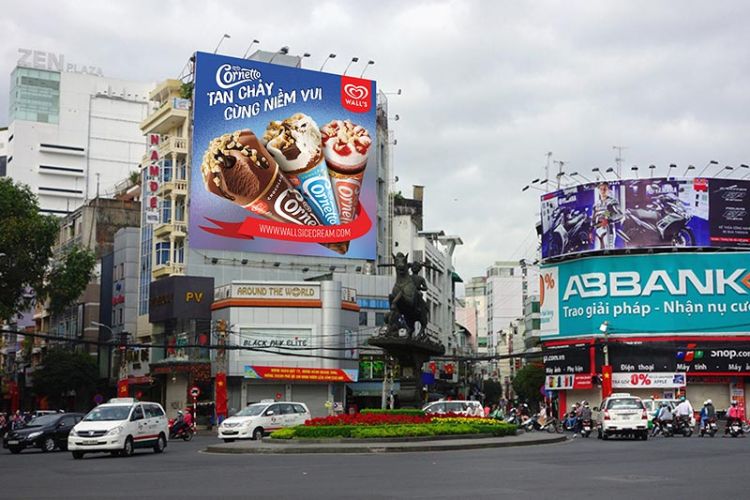
What Is outdoor advertising?
Outdoor advertising or OOH - Out of Home Advertising is the type of advertising medium where the advertising format is outside the consumer's immediate environment. This takes the form of advertising boards lining highways, light boxes positioned in corners where traffic intersects, light boxes positioned in places where people await transportation, as well as advertising positioned on transportation means.
An important strength of OOH media is its permanence and continuous reach. Moreover, online ads can easily be skipped or blocked while OOH media stays in view while taking familiar routes. Vietnam, for instance, having dense traffic and people in motion all the time, can benefit from OOH media in terms of boosting the memory of the brand and its overall presence.
Types of outdoor advertising in Vietnam
The Vietnam outdoor advertising market is gradually becoming more diverse, providing soltuions for various communication targets. Depending on budget, message, and target group, advertisers can choose appropriate formats. Here are five major categories of outdoor advertising that can be taken into consideration in the current market
Large-format advertising
When people think of outdoor advertising, large billboards along high-traffic roads often come to mind. This is one of the most recognizable and widely used OOH formats, especially for brands looking to make a strong visual impact.
With large sizes and elevated placement, high-level OOH reaches a broad audience and works well for product launches, brand expansion, or reinforcing brand presence. This group includes three main formats:
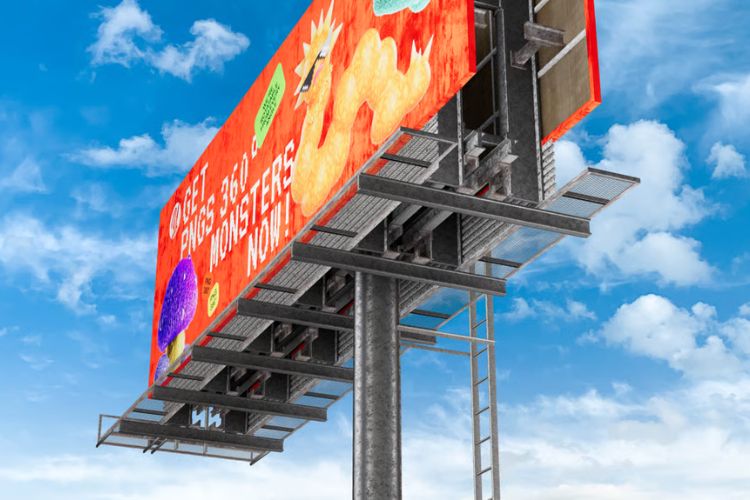
1. Unipole Billboards: Unipole billboard is the most popular form of large format outdoor advertisements. These advertisements consist of single freestanding poles and can measure anywhere between several dozen square meters and more than one hundred square meters in size and tend to be erected along the major roads with high traffic flow. Due to their height and prominent location, these advertisements can reach their message within seconds, but they also tend to display that message effectively if they convey the message in as little words as necessary.
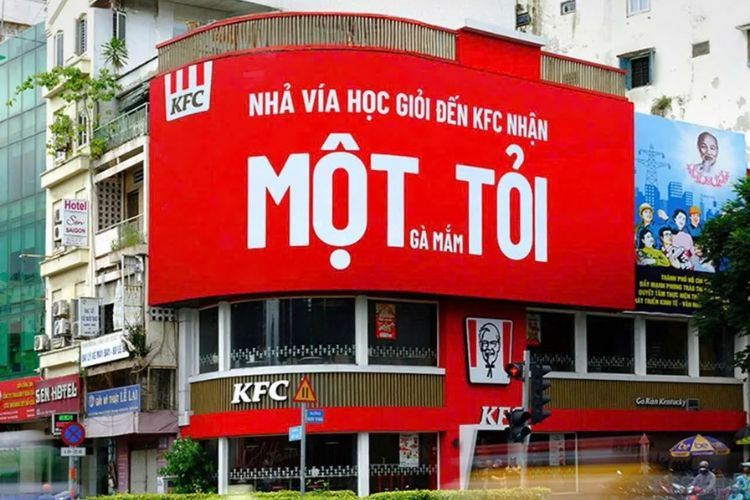
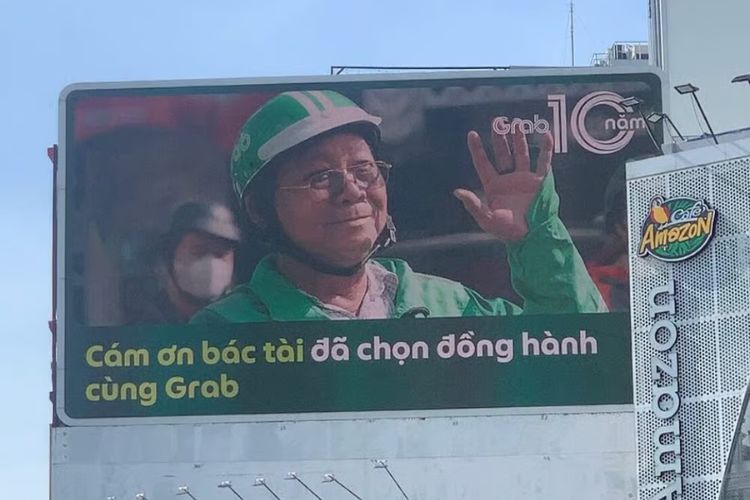
2. Wall-Mounted Billboards: Wall-mounted billboards are directly attached to the facades of buildings, apartment blocks, or large structures in densely populated areas. They use pre-existing building surfaces instead of standing independently. Allowing for more detailed messaging and steady brand recall, viewers are more often able to view them for a longer duration. Their effectiveness, however, depends greatly on building location, viewing angle, and surrounding obstructions
3. Pedestrian Bridge Advertising: The advertisement bridge for pedestrians has lately become a favorite placement in big cities such as Hanoi. The placement involves installing advertisements along the sides of pedestrian bridges at road intersections where traffic is high. The rationale for the high frequency of exposure in this form of advertising lies in the small space and space restrictions imposed by the city.
Low-level outdoor advertising
While high-level OOH advertising has its impact from a distance, low-level OOH advertising is based on proximity and rememberability. These formats reach audiences at a closer range, allowing more time to read and absorb the message.
1. Lightbox Advertising: Lightboxes are commonly found on sidewalks, in front of stores, or within residential areas. Since the light is from within, the images can be viewed both during daytime and at night easily. Since it is quite affordable and very attractive at night, a lightbox is a good option for retail businesses, F&B joints, or services. Smaller size, lower visibility from a distance, and the need for regular cleaning are the downsides of a lightbox ad.
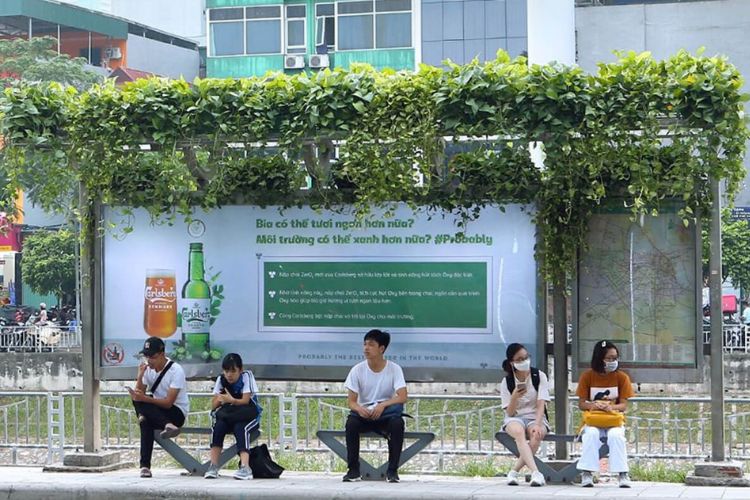
2. Bus Stop Advertising: Bus stop ads take advantage of waiting time, when people are stationary and more attentive. This makes them suitable for informative or explanatory content. Effectiveness depends on passenger volume and the specific location of each bus stop.
Transit advertising
As opposed to fixed formats, transit advertising is highly mobile, with the ability for the brand to appear at multiple locations throughout the day, thus allowing for natural repeat exposure.
1. Bus Advertising: Bus advertising ads are displayed outside or inside a bus and reach a very large and varied group of people daily. Bus advertising can be most effective for a large reach campaign but can differ based on routes and traffic volume.
2. Taxi Advertising: Taxi advertising is carried out primarily in the urban area. The high traffic flow is very helpful in increasing brand recall. However, it may be limited depending on the area.
3. Motorcycle LED Advertising: This type of LED advertising involves using motorbikes with LED screens that travel through narrow streets and residential areas where fixed billboard advertising is impossible. The proximity of the audience to the motorbikes as well as their frequent mobility naturally grabs the audience’s attention. The small screen makes it difficult to pass any lengthy message.
Location-based outdoor advertising
This group focuses on particular settings where audience profiles are clearly established, thus facilitating more precise messaging.
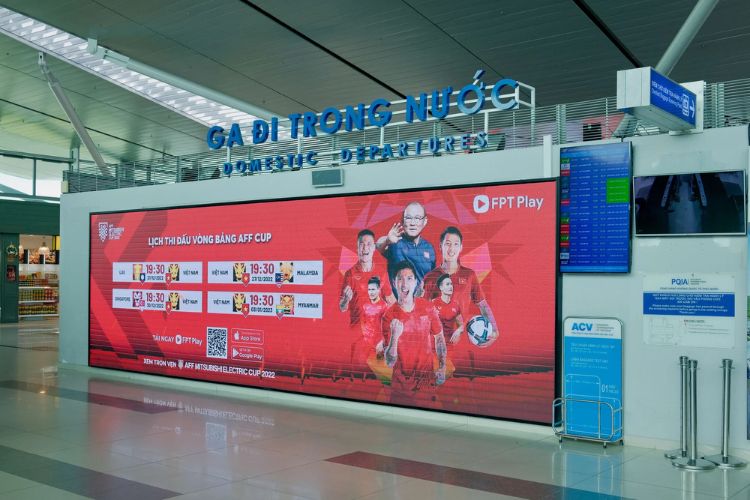
1. Airport Advertising: Airport advertising is conducted at check-in booths, waiting lounges, baggage collection areas, and airport exits. The viewers of this type of advertisement have a tendency of taking considerable time to watch the advertisement and largely consist of people from middle to upper classes of society. This format works well for brand image building but comes with higher costs and limited mass reach.
2. Shopping Mall Advertising: Advertising in the shopping mall is generally done in main halls, escalators, corridors, or the shopping area. The main strength is the direct impact made during the time of purchase. It heavily relies on foot traffic and placement quality.
3. Golf Course Advertising: Ad placement at golf courses targets potential customers through fairways, clubhouses, or rest areas, which expose the ads to a highly income-generating group of people. This may involve associating brands with prestige and authenticity, although the audience is very small and ideal for premium, B2B, or long-term brand-building campaigns.
Digital Out-of-Home Advertising (DOOH)
DOOH uses digital screens to display content. Its biggest advantage is flexibility - content can be updated by time, schedule, or campaign phase, keeping messaging fresh and engaging.
1. LED Screens: LED screens are usually placed at major crossings, building facades, shopping malls, and crowded zones. However, these are usually expensive due to brightness and motion, and one requires simple designs to process deeply.
2. LCD Screens: LCD screen is usually seen at elevators, building lobbies, retail stores, and shopping malls. The viewers are close by, and more information can be placed on the display, but the viewers are limited to people walking by.
3. Frame Screens: Frame screens are known as thin displays of digital information. These screens are positioned inside corridors, reception areas, or shopping malls. The displays are very attractive with a sleek look. Even though they can be easily accommodated in the surroundings without creating much noise, their attractiveness is less when compared to the large LED screens.
4. E-Tower Panel: E-Tower Panel is a relative newcomer, displaying data from power transformer towers within residential districts and urban settings. Featuring lighted displays and tempered glass, these are views that are safe as well as friendly to urban settings. Such panels are usually installed in clusters in the neighborhood; this gives the brands consistent visibility. Due to the small size of the panels, the message should be short and readable.
Outdoor advertising in Vietnam offers a wide range of formats and strategic approaches. However, choosing the right OOH solution based on objectives, budget, and target audience is not always straightforward. When executed correctly, outdoor advertising not only boosts awareness but also builds consistent brand presence in daily life.
If your business is still unsure which outdoor advertising format best fits your campaign, Firstboard is ready to support you from the initial consultation stage. With experience across diverse OOH formats nationwide, Firstboard helps brands identify the right solution and execute campaigns effectively in line with their communication goals. Start your campaign with us!
Picture credit: Unique Media Group, Provisual, Phoenix Group, Hires.vn, Advertising Vietnam