Where DOOH Fits in the Modern Marketing Funnel, and Why Brands Are Reinvesting in Outdoor
For years, the conversation around marketing has centered on performance metrics, attribution models, and digital strategies. However, in 2026, a change is underway. Brands are reassessing their media mix and, behind the scenes, reinvesting in DOOH and outdoor advertising.
This change isn’t being driven by a sense of nostalgia for traditional media. Instead, it’s being driven by a growing understanding that the marketing funnel is broken when we rely on digital media. The cost of acquisition, attention, and ad fatigue have all contributed to a sense that something is wrong with digital media. DOOH is entering the conversation not as a replacement for digital media, but rather as a complementary element to enhance the entire marketing funnel.
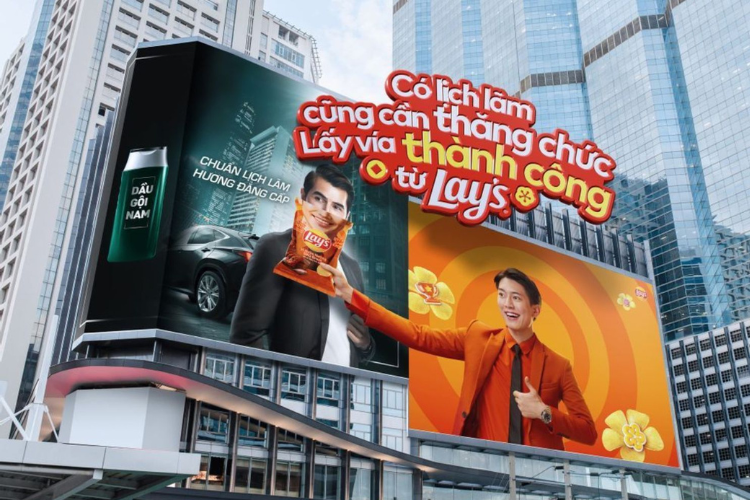
The Problem With the Modern Digital-Only Funnel
On paper, the digital marketing funnel looks efficient. Brands target users, drive clicks, retarget prospects, and optimize conversions. In reality, many marketers are seeing diminishing returns.
Audiences are exposed to thousands of digital ads every day. Algorithms compete for the same limited attention, while consumers grow increasingly skeptical of what they see on screens. As a result, performance channels are becoming more expensive, while brand impact becomes harder to sustain.
The core issue is not targeting or technology. It is mental availability. Many brands are trying to convert audiences who do not yet recognize, trust, or remember them. This is where DOOH begins to play a strategic role.

Understanding DOOH’s Role in the Marketing Funnel
To understand why brands are re-investing in outdoor, it’s essential to stop thinking of DOOH as a standalone channel and start thinking of it as a funnel accelerator.
Top of Funnel: Building Mental Availability at Scale
For brands, at the awareness stage of the marketing funnel, it’s critical to achieve awareness that’s consistent, credible, and hard to ignore. DOOH is a strong fit here because it’s a physical space, not a virtual space.
Digital billboards, transit screens, and city screens offer large-format advertising opportunities to reach users in real-life moments, such as commutes, shopping, or socializing, where users aren’t dividing their attention between multiple open web pages or apps.
Unlike digital advertising, which is gone in 15 seconds or less, DOOH advertising provides a sense of scale and legitimacy to a brand. Brands that achieve this in prominent public spaces are often associated with a sense of legitimacy and trust. One of the primary reasons advertisements billboards remain a fundamental element of brand building is this very fact.
Mid Funnel: Reinforcing Consideration Through Context
The consideration stage is where many digital-only strategies falter, as consumers are aware of the brand name but have no contextual or emotive connection to it.
DOOH helps to overcome this by serving ads in the context of the consumer’s surroundings. A message about a brand, seen near retail centers, business areas, or lifestyle areas, is more relevant as it is related to the consumer’s surroundings.
The digital aspect of DOOH ensures that the message is relevant based on the time of day, weather, or location, making it more contextual and less generic, thus helping the brand shift from being merely known to being considered by the consumer.
It is also worth noting that DOOH complements other channels in this stage of the marketing funnel. Brands have seen an increase in branded searches, social media, and website traffic after launching a DOOH campaign. Thus, DOOH is not seen as a replacement for digital considerations; it is seen as a complement to it.
Lower Funnel: Supporting Conversion Indirectly
DOOH is not typically a conversion driver, and to expect it to behave like paid search is a mistake. However, its effect on conversion is significant.
When people are exposed to a brand repeatedly across physical environments, digital advertising becomes more effective. Retargeting ads don’t feel intrusive. Product pages are visited with increased trust. Conversions increased, not because DOOH drove conversions, but because it reduced uncertainty.
This is why many performance-oriented brands are seeing the value of outdoor advertising again. DOOH helps lower-funnel media perform better.

Why Brands Are Reinvesting in DOOH Now
The renewed interest in DOOH is not accidental. Several structural shifts are driving brands back to outdoor media.
First, digital fatigue is real. Consumers are overwhelmed by online ads and increasingly selective about what they engage with. Outdoor advertising, by contrast, feels less aggressive and more passive, which often leads to higher acceptance.
Second, DOOH has evolved. Modern billboard digital advertising allows for dynamic content, smarter scheduling, and better integration with data. This makes outdoor media more flexible and accountable than it was a decade ago.
Third, measurement has improved. While DOOH does not rely on clicks, brands can now evaluate its impact through reach data, brand lift studies, footfall analysis, and correlations with digital performance. This has given marketers greater confidence in outdoor investment.
Finally, brands are recognizing that long-term growth requires more than short-term optimization. Outdoor advertising supports brand memory, which is increasingly difficult to achieve in digital-only environments.
The Strategic Takeaway for Marketers
The modern marketing funnel is no longer linear, and no single channel can do all the work. Brands that rely solely on digital performance media often struggle to scale sustainably.
DOOH offers something increasingly rare: sustained visibility in the real world. It builds mental availability, reinforces consideration through context, and supports conversion by increasing trust and familiarity.
This is why brands are not abandoning digital, they are rebalancing their strategies. Outdoor advertising, particularly DOOH, is becoming a core component of integrated marketing systems rather than an optional add-on.
At Firstboard, we help brands plan DOOH not as isolated placements, but as part of a broader funnel strategy, connecting location, context, creative, and measurement to real business outcomes. In a world where being seen is no longer enough, the right outdoor strategy can be the difference between short-term clicks and long-term growth.