The Ultimate Guide to 3D Billboards in Indonesia: Beyond the Hype, Into the Future
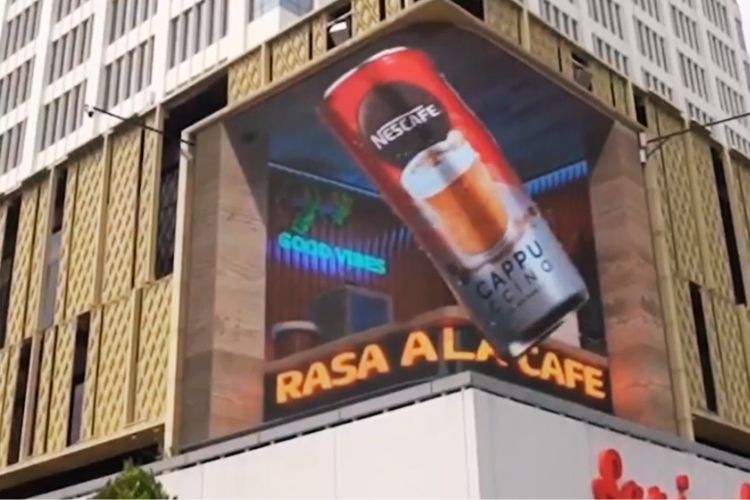
Imagine walking through the electric energy of Jakarta at night. The humid air buzzes with the sound of scooters and the glow of a million screens. Suddenly, your attention is ripped from your phone by a public spectacle: a giant can of soda tilts precariously over the street, seemingly pouring its fizzy contents into an invisible glass. A little further down, a sneaker launches off a screen, frozen in a gravity-defying leap. This isn't a scene from a sci-fi movie; it's the new reality of urban advertising in Indonesia.
Welcome to the dynamic, immersive, and utterly captivating world of 3D billboards in Indonesia. This isn't just an upgrade from static posters; it's a fundamental paradigm shift in how brands communicate in public spaces. For a nation with one of the world's most engaged digital populations, this blend of physical and digital spectacle is the perfect tool to cut through the noise. This comprehensive guide will explore everything you need to know about this phenomenon, from the technical wizardry that powers it to its profound impact on the Indonesian marketing landscape.
Ready to create one-of-a-kind ads in 3 Dimension? Consult now with Firstboard, it's free!
What is a 3D Billboard? Deconstructing the Magic
Before we delve into the "why" and "where," let's demystify the "how." A 3D billboard, often called an anamorphic or optical illusion billboard, creates a stunning perception of depth and projection on a flat or specially shaped surface. The key differentiator? No glasses are required.
The magic is a sophisticated illusion, a ballet between art and science:
-
The Canvas: Unlike traditional flat screens, many 3D billboards use specially built curved or angled LED screens. This physical structure is the first crucial step in breaking the two-dimensional plane.
-
The Distorted Design: This is the core of the trick. Content is not designed to look correct on a flat plane. Using advanced 3D modeling software, graphic artists create a video or image that is intentionally warped, stretched, and distorted.
-
Precise Projection & Mapping: This distorted content is then meticulously mapped onto the unique physical geometry of the billboard. The software calculates exactly how the image should appear from one specific "sweet spot"—the ideal viewer perspective on the street or sidewalk.
-
The Illusion of Depth: When viewed from this calculated vantage point, the human brain is tricked into interpreting the warped image as a three-dimensional object extending out of or receding into the screen. The curved surface and the distorted graphics align perfectly with our depth perception cues, creating a convincing 3D effect.
This technology transforms advertising from a passive broadcast into an active, shareable event.
Your Questions Answered: The Nuts and Bolts
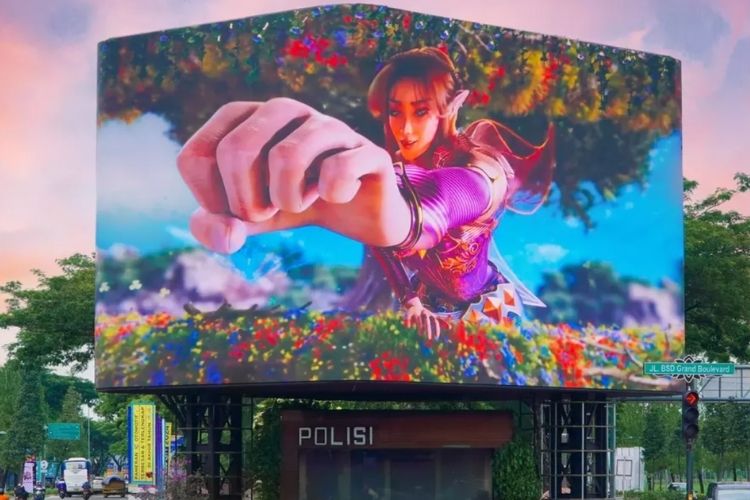
A common question that arises is, "Can any digital billboard be turned into a 3D billboard?"
The answer is not exactly. While a flat LED screen can achieve a basic pseudo-3D effect, the most impressive and convincing illusions require a specially designed curved or angled LED screen. The physical structure of the billboard is a critical component of the optical illusion, working in tandem with the distorted content to sell the effect. Trying to achieve a full anamorphic illusion on a perfectly flat surface is far less effective.
Another frequent query is about the production timeline: "How long does it take to produce a 3D billboard video?"
The timeline can vary based on complexity, but a typical production, from concept to final delivery, can take anywhere from 4 to 8 weeks. This includes ideation, 3D modeling, animation, the anamorphic distortion process, and rigorous testing to ensure the illusion works perfectly from the intended street-level viewpoint.
Why Indonesia? The Perfect Storm for a 3D Advertising Revolution
The rapid adoption of 3D billboards across Indonesia's major cities is no accident. It's the result of a unique convergence of market conditions, consumer behavior, and technological readiness.
1. The "Wow" Factor in a Saturated Market
The average city dweller is bombarded with thousands of marketing messages daily. A standard digital billboard, while dynamic, has become part of the background urban noise. A 3D billboard, however, forces a double-take. It creates an unparalleled "Wow" Factor that breaks through audience apathy, leading to significantly higher brand recall and emotional connection. In a competitive market like Indonesia, being memorable is half the battle won.
2. The Social Media Amplification Engine
Indonesia is a social media powerhouse. With over 170 million active social media users and a culture deeply rooted in platforms like TikTok, Instagram, and YouTube, content that is visually spectacular is content that gets shared. A 3D billboard is inherently a photo and video opportunity. People don't just see the ad; they stop, record it, and share it with their networks. This user-generated content creates a powerful viral ripple effect, amplifying the campaign's reach far beyond its physical location and generating millions of free, authentic impressions.
3. A Symbol of Modernity and Innovation
For both international and local brands, using a 3D billboard is a powerful brand statement. It signals that a company is forward-thinking, technologically advanced, and a leader in its category. In a rapidly developing economy, associating your brand with cutting-edge innovation can significantly enhance brand perception and appeal to the aspirational, growing middle class.
4. Captivating a Captive Audience
Prime billboard locations in Indonesia are situated in areas with intense pedestrian and vehicular traffic—think Jakarta's Sudirman Central Business District (SCBD) or major shopping mall facades. A 3D billboard doesn't just capture glances; it holds attention. It turns a routine traffic jam or a walk to the mall into a moment of entertainment, creating a positive and lasting brand association.
Case in Point: Iconic 3D Billboard Campaigns in Indonesia
While campaigns rotate frequently, a few have set the benchmark for creativity and impact. This leads to the natural question: "Which Indonesian brands have used 3D billboards?"
While specific campaigns are always rotating, major players in the F&B, automotive, telecommunications, and tech industries have been early adopters. We've seen spectacular campaigns from brands like:
-
Food and Beverage Giants, like Nescafe and Nutrijell, have created hyper-realistic illusions of popping out fresh-looking can of coffee and chocolate pudding, perfect for attracting the audience in this tropical climate.
-
Apparel Leaders like Nike have made their new models appear to kick off the screen, emphasizing power and innovation.
-
Various Entertainment and Tech companies have used 3D billboards to promote new blockbuster movies or smartphone launches, where characters or products burst through the screen, generating immense pre-launch hype.
Keep an eye on major intersections in Jakarta, Tangerang, and Medan for the latest, most creative installations.
The Prime Real Estate: Where to Find 3D Billboards in Indonesia
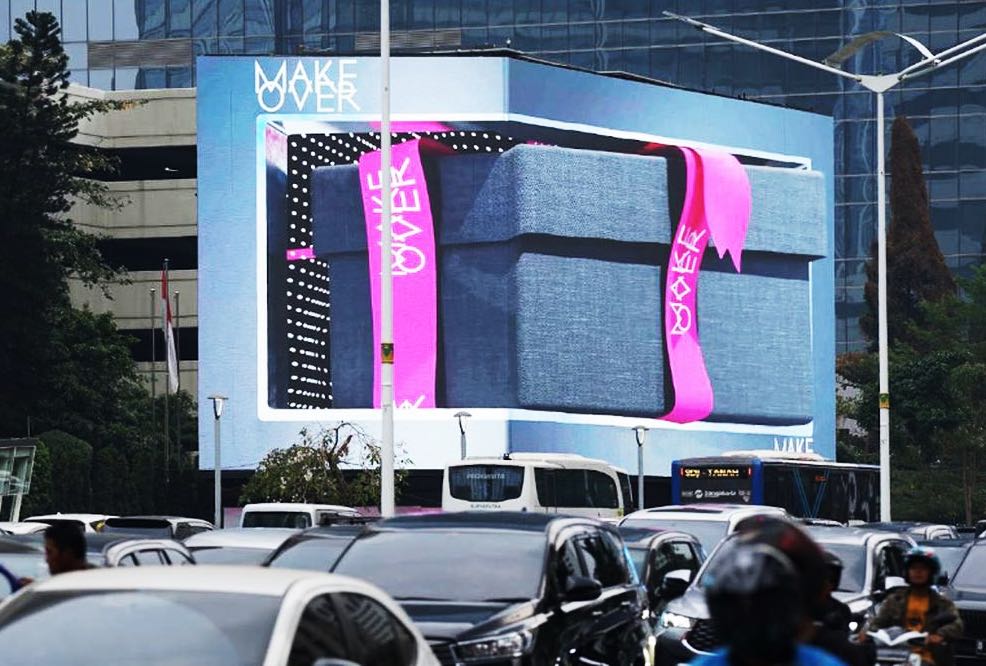
The deployment of this technology is strategically focused on high-visibility, high-footfall areas:
Jakarta
The undisputed epicenter. Key locations include:
-
SCBD & Sudirman Area: The heart of the financial and business district, targeting affluent professionals and commuters.
-
Thamrin Road: A central artery with a mix of government offices, hotels, and shopping centers, ensuring a diverse audience.
-
Grogol & Tomang: Major intersections in West Jakarta with immense daily traffic volume.
-
Grand Indonesia & Plaza Senayan: The facades of premier shopping malls capture the attention of shoppers and diners.
Bali
As a global tourist destination, Bali is an ideal canvas. Locations in Kuta, Seminyak, and near the Ngurah Rai Airport allow brands to target both international tourists and domestic travelers with spectacular, destination-appropriate creatives.
Surabaya, Bandung, Makassar, Medan
These major metropolitan hubs are quickly catching up. As the advertising market evolves, expect to see more 3D installations in their central business districts and modern retail complexes, catering to their large and economically vibrant populations.
The Investment: Understanding the Cost of a 3D Billboard Campaign in Indonesia
It's crucial to understand that 3D billboard advertising is a premium offering. The most common question from marketers is: "How much does a 3D billboard campaign cost in Indonesia?"
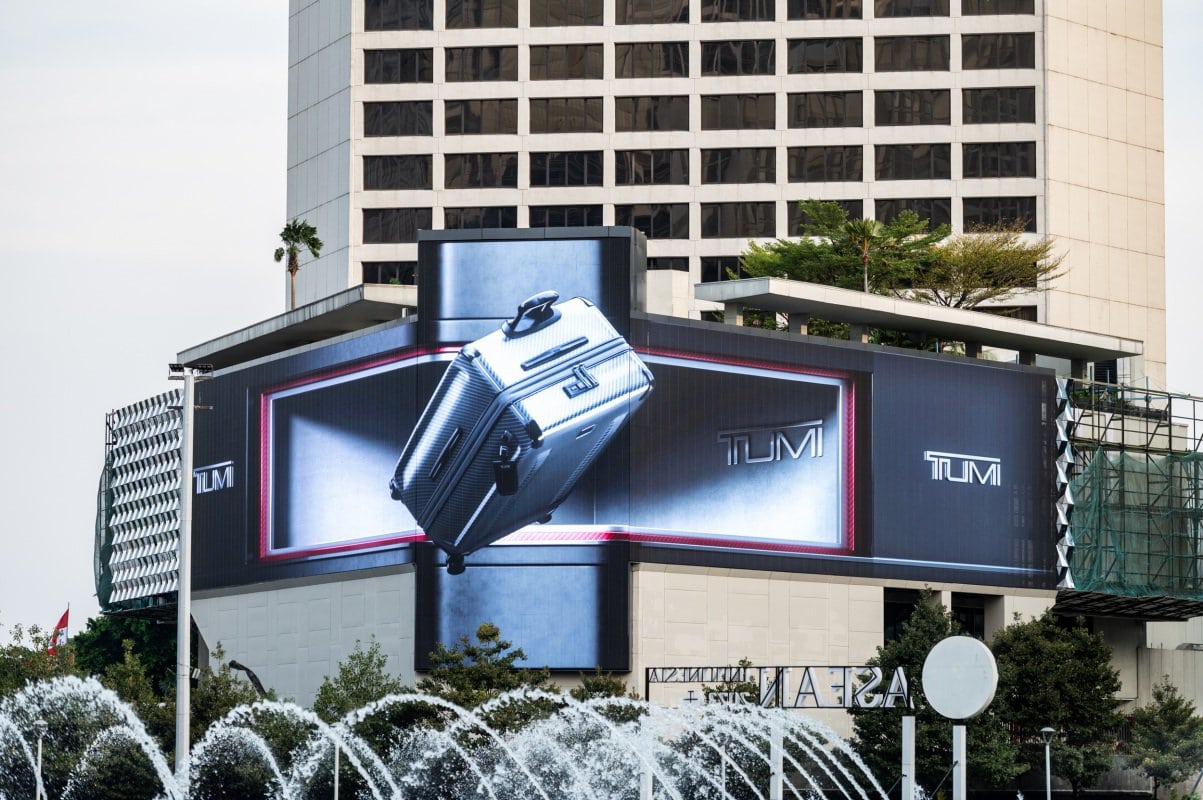
Costs vary significantly and are influenced by several factors:
-
Location: A prime spot in Jakarta's SCBD commands a premium compared to a secondary city location.
-
Duration: Campaigns can run from a few weeks to several months.
-
Screen Size and Specifications: Larger, higher-resolution, or custom-shaped LED screens cost more.
-
Content Creation: This is a major part of the budget. The specialized 3D modeling, animation, and video production require a team of highly skilled artists and technicians.
While specific figures are proprietary and vary by vendor, brands should budget for a comprehensive campaign that encompasses both the media buy (screen rental) and the high-cost creative production. For major brands looking for a mass-impact, viral-ready campaign, the ROI in terms of brand lift and social media amplification can be well worth the investment.
The Future is Dimensional: What's Next for 3D Advertising in Indonesia?
The current 3D billboards are just the beginning. The future points towards even more integrated and interactive experiences:
-
Augmented Reality (AR) Integration: The next logical step is to bridge the physical and the personal digital world. Imagine pointing your smartphone at a 3D billboard and seeing the character leap onto your screen to play a game or offer an exclusive coupon via a "view in your room" AR experience.
-
Dynamic & Data-Driven Content: Future billboards could change their 3D creative in real-time based on external data feeds—showing a refreshing iced tea when the temperature rises, or promoting a nearby restaurant during lunch hours.
-
Interactive & Gamified Billboards: Using sensor technology, billboards could respond to audience movement or participation, turning a public space into a giant interactive game, further deepening engagement.
-
Hyper-Localized and Sustainable Messaging: As technology becomes more accessible, we might see smaller, hyper-local 3D screens in malls or communities. Furthermore, the industry will continue its shift towards energy-efficient LED technology, aligning with global sustainability goals.
Navigating Regulations: A Key Consideration
As we look to the future, it's important to address a critical question: "Are there any content restrictions for 3D billboards in Indonesia?"
Yes, absolutely. Like all public advertising, content must comply with Indonesian broadcasting and advertising regulations, overseen by bodies like the Indonesian Broadcasting Commission (KPI) and adhere to general norms of public decency. The immersive and often startling nature of the 3D medium means brands and regulators must be especially cautious not to create content that could be dangerously distracting for drivers or unsettling for the general public. Responsible innovation is key to the long-term success of this medium.
Conclusion: Secure Your Spot on Indonesia's Most Premium Digital Canvases
The revolution of 3D advertising in Indonesia is defined by its locations as much as its technology. True impact is achieved not just with groundbreaking creative, but by placing that creative on the nation's most sought-after digital canvases—the iconic screens in Jakarta's SCBD, the vibrant facades of Grand Indonesia, and the high-traffic arteries of Surabaya and Bali.
This is the core of what we do at Firstboard. We provide direct access to Indonesia's premier 3D LED billboard inventory, handling the complex logistics of location sourcing, booking, and technical execution. We ensure your campaign doesn't just run—it commands attention from the most valuable vantage points.
Ready to dominate the skyline? Partner with Firstboard to secure your brand's place on these exclusive platforms and transform your 3D vision into an urban landmark.
Picture Source: Poskota, Instagram, Jakarta Globe, LestariAds, Luxina