Static Vs LED Billboard Malaysia: Which Performs Better?
Outdoor advertising in Malaysia is changing quickly, and I've been keeping a close eye on it for a long time. Brands that used to only use static billboards are now asking themselves a very specific question: should we stick with what we know or switch to LED? When you compare static and LED billboards, you're probably trying to find the right balance between visibility, cost, and actual performance, not just what's popular.
This guide shows what really works in the Malaysian market right now by using real-life examples, practical observations, and the kinds of details that decision-makers usually want to see before they spend money.
The real question most brands are asking
Most people don't really care which format is "better." They want to know which one gets people's attention, helps them remember, and gets them to ask questions without wasting money. The answer isn't always clear in Malaysia, where traffic patterns, weather, and audience behavior change from city to city.
I've seen brands switch to LED too soon and have trouble. In the right places, I've also seen static billboards work better than digital screens. Not hype, but context affects performance.
Understanding static billboards in Malaysia
There are still a lot of static billboards on highways, city streets, and in industrial areas. They haven't gone away for a reason.
What static billboards do best
When consistency is important, static formats work best. A single message sent every day makes people feel comfortable.
Some of the most important strengths are:
-
Repetition helps people remember your brand
-
Less money spent on making and keeping things up
-
No distractions from changing pictures
-
Highways and long routes are easy to see
In my experience, static billboards are great for real estate projects, construction brands, and services that want to reach people who commute every day. It sticks when someone sees the same message twice a day for weeks.
Where static billboards struggle
There are some things that static formats can't do. They don't change, update, or respond to messages that are sent at certain times.
Things that are hard to do:
-
One message for the whole campaign
-
No room for promotions or timing
-
It's harder to stand out in places with a lot of people
Static boards can feel limiting if your offer changes a lot or if you depend on urgency.
How LED billboards are changing ads outside
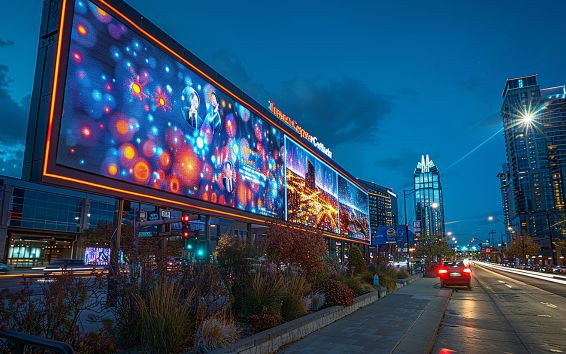
Digital billboards didn't just pop up in Malaysia all of a sudden. LED formats moved into high-end areas because screen prices went down and infrastructure got better.
Why brands are switching to LED
LED billboards get people's attention right away. Moving things, light, and changing pictures naturally draw the eye.
Brands usually notice these benefits first:
-
Several ads in one place
-
Scheduling content based on time
-
Good visibility at night and in the rain
-
More attention in busy city areas
I've seen interactive billboards near malls and transit hubs where people stop and look instead of just passing by. In these places, LED screens can easily do better than static formats.
Where LED billboards fall short
LED is strong, but it's not magic.
Things to think about:
-
Higher costs for rent and production
-
Less time for each ad to show its message
-
If the visuals aren't clear, the message might be missed
One mistake I see a lot is giving digital creatives too much work. There is too much text and too many transitions, and the message is gone in seconds.
Static vs LED billboard Malaysia: performance comparison
This is where things start to make sense. When you look at static vs. LED billboard Malaysia options, performance usually depends on four things.
1. Location and traffic speed
Static billboards are better for highways. Drivers don't have much time, and static messages are easier to understand.
LED lights are better for urban intersections, malls, and transit areas. Moving more slowly gives digital content time to load.
2. Length of the campaign
Static billboards often work better for long-term branding campaigns. The price stays the same, and the memory builds up over time.
LED screens are usually better for short-term promotions, launches, or events because the messages can change quickly.
3. Audience behavior
People who commute every day respond well to repetition. People who shop casually respond to things they see.
It's more important to know who sees your billboard than what it looks like.
4. Discipline in creativity
I've seen simple, static designs do better than flashy LED ads just because the message was clear. Format never saves weak creativity.
Real-life situations from the Malaysian market
A local property developer used static billboards along a busy highway for six months. The message stayed the same. Calls for information slowly but steadily went up, especially from nearby areas.
Another store brand put up LED billboards in Malaysia near shopping areas. They changed the offers every few hours. Deals on lunch were available in the afternoon, and deals on dinner were available at night. There were more people walking by during the hours that were advertised.
Both of them worked. The difference was in how things were lined up, not how they were set up.
Common mistakes brands make
A lot of campaigns lose money here.
Choosing LED just because it looks modern
Not everything that is new works. LED movement won't help if your audience is moving quickly.
Overloading digital creatives
Viewers get confused when there are too many animations. Digital billboards don't need more complicated designs than static ones; they need simpler ones.
Ignoring viewing distance
At 100 meters, a message that is clear at 10 meters may not be. This is true for both static and Malaysia billboard placements.
Measuring success the wrong way
A lot of brands only look at impressions to see if they are successful. That doesn't tell the whole story.
How to figure out results and real performance
Outdoor advertising works best when the measurements are accurate.
Important things to keep an eye on:
-
Source of inquiry mentions
-
Changes in traffic based on location
-
Increase in brand search during campaign
-
Patterns of response based on time
I often tell companies to just ask people who call them how they found out about them. It seems simple, but it works really well.
For LED campaigns, look at how people respond at different times of day. For static, look at how consistent it is over weeks, not days.
Static and LED together: an underrated approach
I've seen some of the best campaigns that used both formats.
Long-term brand recognition came from static billboards. LED screens were used for ads and promotions. They helped each other out.
More and more experienced advertisers are using this mixed approach on platforms like firstboard, where placement strategy is just as important as format.

Choosing the right format for your brand
Before you make a choice, ask yourself:
-
Do I want flexibility or consistency?
-
Is my audience going fast or slow?
-
Am I promoting an offer or building a brand?
Once you understand these questions, the right answer often becomes clear.
Why Choose us
At Firstboard, we don't pay as much attention to trends as we do to what works for each place and audience. I've seen too many brands go after formats instead of results. It's not about whether the billboard is static or LED; it's about matching the message, the movement, and the mindset.
If you're planning your next outdoor campaign in Malaysia, knowing these differences ahead of time can help you save money and get better results without making things too complicated.
Questions and Answers
Are LED billboards always better than regular ones?
No. LED billboards work better in busy cities where people stop or slow down. On highways and long routes where clear, repeated messages are more important than motion, static billboards often work better.
How long should a billboard campaign last in Malaysia?
Most of the time, it takes four to eight weeks to see a change. Longer times are usually better for static billboards, but digital billboards can show results faster if the message is timed right.
Do digital billboards work during the day?
Yes, but the quality of the art is important. In the daytime, bright, high-contrast images work best. Even on high-quality screens, poorly designed content can fade into the background.
Can LED billboards help small businesses?
It's possible for them to do this, especially with short, focused campaigns. Smaller brands can compete without making long-term commitments by using time-based placements and simple messages.