Best Strategies for Billboard Digital Advertising in 2026
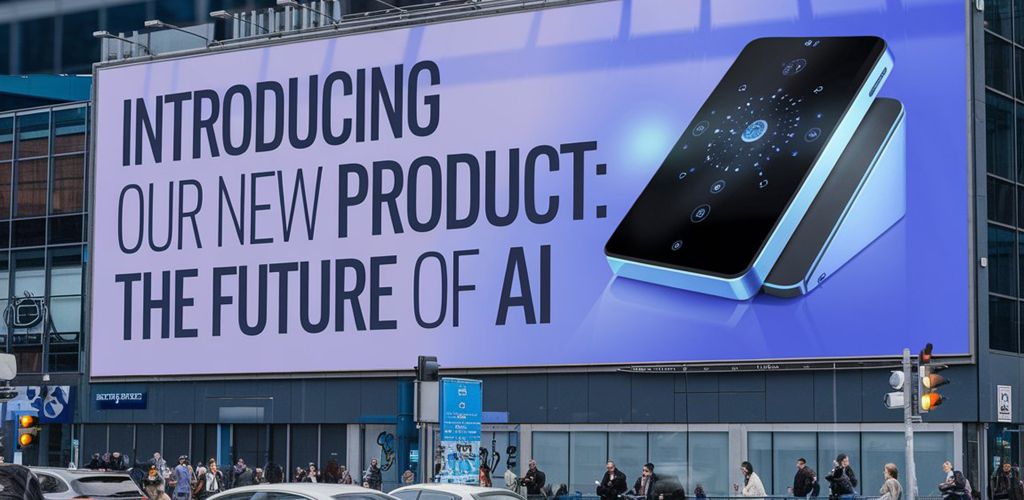
If you've ever driven past a glowing screen on a busy highway and wondered why some ads stop you mid-thought while others blur into the background — that's the real question behind billboard digital advertising. It's not just about putting your brand on a screen. It's about doing it in a way that actually makes people look, remember, and act.
Most brands I've worked with get the basics right. They book the screen, upload a design, and wait. Then they wonder why the results are underwhelming. The difference between a forgettable ad and one that drives real business? Strategy.
What Is Billboard Digital Advertising (And Why It Still Works)
Digital billboards are large-format LED displays placed in high-traffic locations — highways, city centers, transit hubs, shopping areas. Unlike traditional static billboards, digital ones rotate multiple ads, update in real time, and can be targeted by time of day, day of week, or even weather conditions.
That flexibility is what makes billboard digital advertising so powerful in 2026. You're not locked into a printed poster for six weeks. You can run a morning coffee ad at 7 AM and a dinner special at 6 PM — same screen, different message.
And the audience size is still massive. Screen time online keeps growing, yes. But people still commute. They still walk city streets. Out-of-home media reaches people when they're physically in the world, not hiding behind an ad blocker.
How to Build a Strategy That Actually Gets Results
1. Choose the Right Location First
This sounds obvious, but I've seen brands overspend on premium placements that didn't match their actual customer geography. Before you rent a billboard, think about where your customers physically are.
If you're running a local service business, a screen near your neighborhood or a feeder road into your service area is worth more than a flashier spot across town. When you rent a billboard, location isn't just about visibility — it's about relevance.
Ask the provider:
- Average daily traffic count
- Demographic breakdown of that corridor
- Competing advertisers on the same display
That last one matters. If you're a budget brand and the screen before yours runs a luxury car ad, the tone shift can actually work against you.
2. Design for Three Seconds — Not Thirty
Digital billboard viewers have about three seconds of engagement. Maybe less at 70 mph.
Your creative has to work with that constraint, not fight it. One core message. One visual anchor. A brand name or logo that doesn't need to be "found" — it should just be there.
In my experience, the biggest creative mistake is treating a billboard like a social media post. No fine print. No long taglines. No QR codes that people can't scan from a moving car (yes, people still do this).
The best-performing ads I've reviewed follow a simple formula: bold visual + 5-word max headline + brand identifier. That's it.
3. Use Dayparting to Your Advantage
One of the biggest advantages of digital over static — and one of the least used by smaller advertisers — is dayparting. That's just a fancy word for scheduling your ads to run at specific times.
A gym can run a "Start your morning right" message at 6–9 AM and a "You earned it" recovery message after 5 PM. A restaurant can push lunch specials from 11 AM to 1 PM. A retailer can promote weekend sales starting Thursday evening.
This isn't complicated to set up. Most digital billboard providers, including Firstboard, offer scheduling tools as part of the standard package. If yours doesn't, that's a conversation worth having before you sign anything.
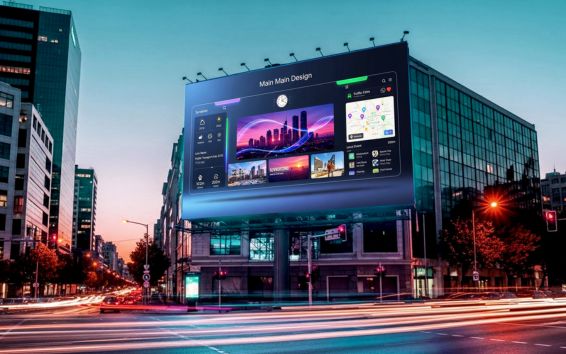
4. Match Your Message to the Season and Context
Static billboards run the same message in rain, sunshine, and snowstorms. Digital ones don't have to.
Weather-triggered and seasonally-updated campaigns consistently outperform static creative. A hardware store promoting space heaters when the temperature drops below a certain threshold. A travel brand pushing beach deals when it's been raining for a week straight.
Context relevance drives attention. The brain notices things that feel timely — it's just how we're wired.
Understanding Digital Billboard Cost Before You Commit
Let's talk about digital billboard cost, because this is where a lot of first-time advertisers get tripped up.
Digital billboard pricing varies significantly based on:
Location—A screen in a major metro costs more than a suburban route, obviously
Traffic volume—Higher impressions = higher CPM (cost per thousand views)
Duration—Weekly, monthly, or campaign-based pricing all exist
Slot rotation—How many advertisers share the screen and how often your ad appears
Generally speaking, digital billboard costs in 2026 range from a few hundred dollars a month for smaller markets to several thousand for premium city placements. The key metric to look at isn't the sticker price—it's cost per impression relative to your target audience.
Don't just compare billboard advertising cost to social media CPM. Compare the quality of the impression. A billboard outside a specific retail corridor is worth more to a relevant brand than ten thousand scroll-past impressions online.
Common Mistakes Brands Make With Digital Billboard Advertising
Running the same creative for months.
Digital screens are made for updating. If your ad looks the same in month three as it did in week one, you're leaving a key advantage on the table.
Ignoring the viewing angle and distance.
Not all screens are created equal. An ad designed for a close-range pedestrian screen will look very different on a highway placement. Always get specs before finalizing your design.
Forgetting to connect it to a broader campaign.
Billboard digital advertising works best when it reinforces something people are also seeing in other channels — social, search, local. Standalone campaigns can work, but integrated ones convert better.
Using too many words.
I keep coming back to this because it's genuinely the most common issue. If you need more than six words to explain your offer, the billboard isn't the right place for that explanation.
How to Measure Results From Your Billboard Campaign
Out-of-home has historically been hard to measure. That's changed a lot.
Here's what you can actually track in 2026:
Website traffic spikes—Run the campaign, check if direct and branded search traffic lifts during active periods
Promo codes or landing pages—Create a unique URL or code specifically for the billboard to track direct response
Foot traffic data—Some providers offer anonymized mobile location data showing if people who passed the screen visited your location
Brand recall surveys—useful for awareness-stage campaigns, especially in local markets
Firstboard provides campaign reporting tools that make it easier to correlate your display schedule with real-world engagement metrics. It's not as immediate as a Facebook ad dashboard, but it tells a more complete story when read alongside your other data.
Why Choose Firstboard for Your Digital Billboard Advertising
Not every provider handles digital billboard campaigns the same way.
Firstboard combines premium screen locations with flexible campaign tools — including scheduling, creative support, and transparent pricing. Whether you're a local business running your first out-of-home campaign or a regional brand scaling across multiple markets, the platform is built for usability without sacrificing reach.
No surprise fees. No locked-in minimums you didn't agree to. Just clear inventory, honest traffic data, and a team that's worked with real advertisers across real markets.
Final Thought
Billboard digital advertising isn't magic. But done right — right location, smart creative, proper scheduling — it's one of the most effective ways to build brand presence in the physical world. Start with one screen. Test your creative. Measure what you can. Then scale what's working.
If you're ready to explore options, Firstboard makes it straightforward to find inventory, understand pricing, and launch a campaign that actually fits your goals — without the guesswork.A
FAQ: Billboard Digital Advertising
How much does it cost to rent a billboard for a month?
Digital billboard costs vary by location and market. Smaller markets may start around $300–$500/month, while high-traffic urban placements can exceed $5,000/month. The best approach is to get a quote based on your specific target area and campaign goals.
Can I update my billboard ad after it goes live?
Yes — that's one of the core advantages of digital over print. Most providers allow creative updates with reasonable notice, sometimes within 24–48 hours depending on the platform.
Is billboard advertising worth it for small businesses?
It can be, especially for local service businesses, retail stores, or restaurants. The key is choosing a location close to your actual customer base and keeping the creative simple and direct.
How long should I run a billboard campaign?
Minimum four weeks is generally recommended to build meaningful frequency with your audience. For brand awareness goals, three months gives you much better recall data to work with.