LED Billboard Advertising: Tips for Better ROI
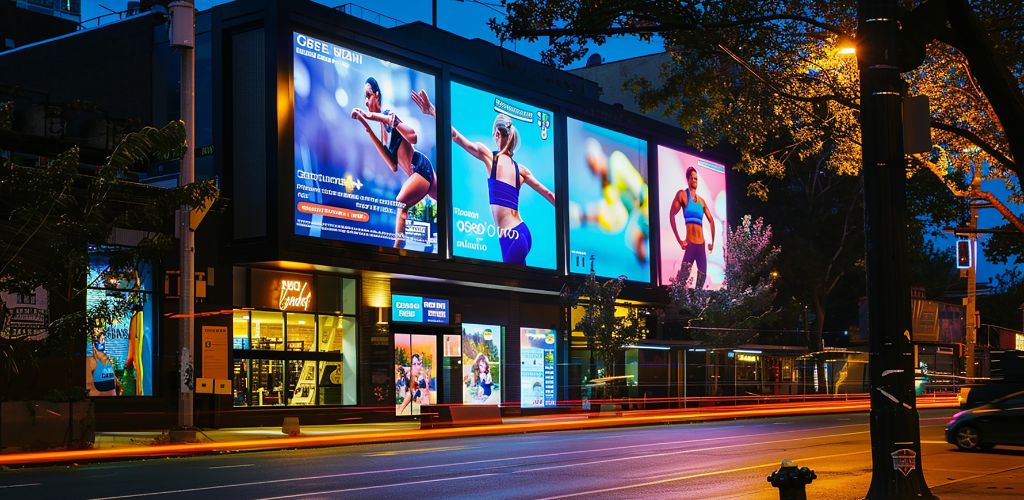
Most brands book a billboard, run the same design for 30 days, and then wonder why nothing changed. I get it — the screen looks great, the location seemed busy, so what went wrong?
Here's the honest answer: LED billboard advertising isn't just about showing up. It's about showing up right. And the gap between a campaign that builds real traction versus one that quietly burns budget comes down to a handful of decisions most people overlook.
Let's get into it.
What LED Billboards Actually Do (and What They Don't)
Before anything else — reset your expectations a little.
A billboard doesn't close sales on its own. It builds familiarity. It puts your brand in someone's mind before they even know they need you. And when done well, that familiarity compounds over time into real commercial results.
I've seen brands dismiss outdoor advertising after one underwhelming campaign, only to realize later they were measuring it like a pay-per-click ad. That's the wrong lens entirely.
What LED billboard advertising does exceptionally well is scale. A single well-placed screen can deliver millions of impressions a month. And unlike print, you can refresh your creative in hours if something isn't working.
That flexibility is genuinely underused by most advertisers.

Location Strategy: Traffic Volume Is Not the Whole Story
A billboard sitting on a road with 200,000 daily commuters sounds impressive. But if those commuters have zero connection to what you're selling, you're essentially paying for visibility that goes nowhere.
The question isn't just how many people pass this location. It's who they are and what headspace they're in when they pass it.
For billboard advertising in Malaysia, this distinction matters a lot. Someone stuck in slow-moving traffic near a commercial district is in a completely different mindset than someone flying past on a highway at 110km/h. One of those audiences is far more likely to absorb your message.
A few things worth checking before you commit to a spot:
- What's the average vehicle speed past this board?
- What businesses are nearby — do they attract your kind of customer?
- Is this a commuter route or a destination route?
Repeat exposure also plays a bigger role than single-view impressions. Someone who passes your board on the way to work every morning for three weeks is far more primed to act than someone who saw it once.
The 3-Second Rule Your Designer Probably Doesn't Know About
Your audience is moving. They're not standing in front of your billboard with a coffee, taking it all in. You have somewhere between two and four seconds to make an impression.
Most creative briefs don't account for this.
I've reviewed campaigns where the billboard had a tagline, a product shot, five feature callouts, social handles, a QR code, and a website URL — all competing for attention at once. On a moving road. In bright sunlight.
Nobody read it.
For advertising on billboards that actually registers, the rule is ruthless simplicity:
- One message. That's it.
- One strong visual — bold, high contrast, immediately readable
- Seven words or fewer of copy (honestly, fewer is better)
- Colors that pop on LED specifically — test on-screen, not just in design software
If your creative looks great as a flyer, it probably needs to be redesigned for a billboard. They are not the same medium.
Dayparting: One of the Most Underused Features in Outdoor Advertising
Static billboards run the same message all day. LED screens don't have to — and this is a genuine competitive edge if you use it.
Dayparting means scheduling different creatives for different time windows. A breakfast café pushing its morning offer from 7–10am, then switching to a lunch deal, then a brand message during evening commute hours. That's one screen doing three jobs.
From what I've observed in billboard advertising Malaysia campaigns, brands that schedule content contextually — based on what their audience is thinking about at that specific hour — consistently get stronger recall than brands running a single static loop.
It takes a bit more planning upfront. It's absolutely worth it.
Common Mistakes That Quietly Kill Campaign ROI
These come up more than they should.
Designing for print. Fine gradients, thin fonts, and detailed imagery look beautiful in a brochure. On a large LED screen viewed at speed, they fall apart. Always proof your creative on an actual display — not just your laptop screen.
Never changing the creative. Regular commuters pass the same billboard daily. After two weeks, their brain tunes it out completely. Rotating creative every couple of weeks resets that attention.
Ignoring what's around the board. If three other brands on the same stretch are running blue and white designs, your blue and white design disappears into the visual noise. Know your competitive context before you brief your designer.
No measurement plan from the start. This one stings the most, because it's entirely preventable.
How to Actually Measure What Your Billboard Is Doing
Outdoor has always been trickier to measure than digital. But "tricky" doesn't mean impossible.
Document everything before launch — website traffic, branded search volume, in-store visits if relevant. That's your baseline.
During the campaign, use specific tracking signals: a URL only shown on the billboard, a landing page built just for this campaign, or a promo code. When someone types that URL or uses that code, you know where they came from.
Watch your branded search volume in Google Search Console. When people see your brand on a billboard and get curious, many will search your name. A noticeable lift in branded searches during the campaign window is a strong signal the creative is working.
For longer campaigns, a simple recall survey among your target audience can surface insights that numbers alone won't show.
Just don't expect the same attribution model you'd use for a Facebook ad. Outdoor works differently — it builds the trust that makes your digital ads perform better downstream.
Why Firstboard
At Firstboard, we work with brands across Malaysia who want more than just a screen rental.
Location selection, creative guidance, scheduling strategy — we're involved in all of it, because we know that's where the real difference gets made. We understand the Malaysian outdoor market, the traffic patterns that matter, and what it actually takes to make advertising on billboards drive results rather than just impressions.
If your last outdoor campaign felt like a shot in the dark, let's have a different kind of conversation.
FAQ
How much does LED billboard advertising typically cost in Malaysia?
It depends heavily on location and duration. Urban high-traffic placements in Kuala Lumpur cost more than suburban screens, naturally. Entry-level campaigns can start from a few thousand ringgit monthly, but rates vary widely. The better question is always cost-per-meaningful-impression, not just the headline number.
How long does a campaign need to run before showing results?
For brand awareness, four to six weeks is usually the minimum to see meaningful recall lift. Event-based or promotional campaigns can work in shorter windows, but if you want lasting impact on how people perceive your brand, give it at least six to eight weeks.
Can a small or local business make LED billboard advertising work?
Yes — often more effectively than large brands, because the strategy is simpler. Pick a screen close to where your customers already are, keep the message hyper-local, and stay consistent. The cost-per-impression for a well-chosen local screen can be surprisingly competitive.
What creative specs do LED billboard operators usually need?
Most accept high-resolution MP4 for animated content and PNG or JPEG for static frames. Always confirm resolution, aspect ratio, maximum file size, and loop duration with your specific provider before designing anything — specs vary between screens and operators.