Beyond the Screen: How Out-of-Home Media Establishes Market Authority in Southeast Asia
The Problem: The Vanity Metric Trap in the Southeast Asia Market
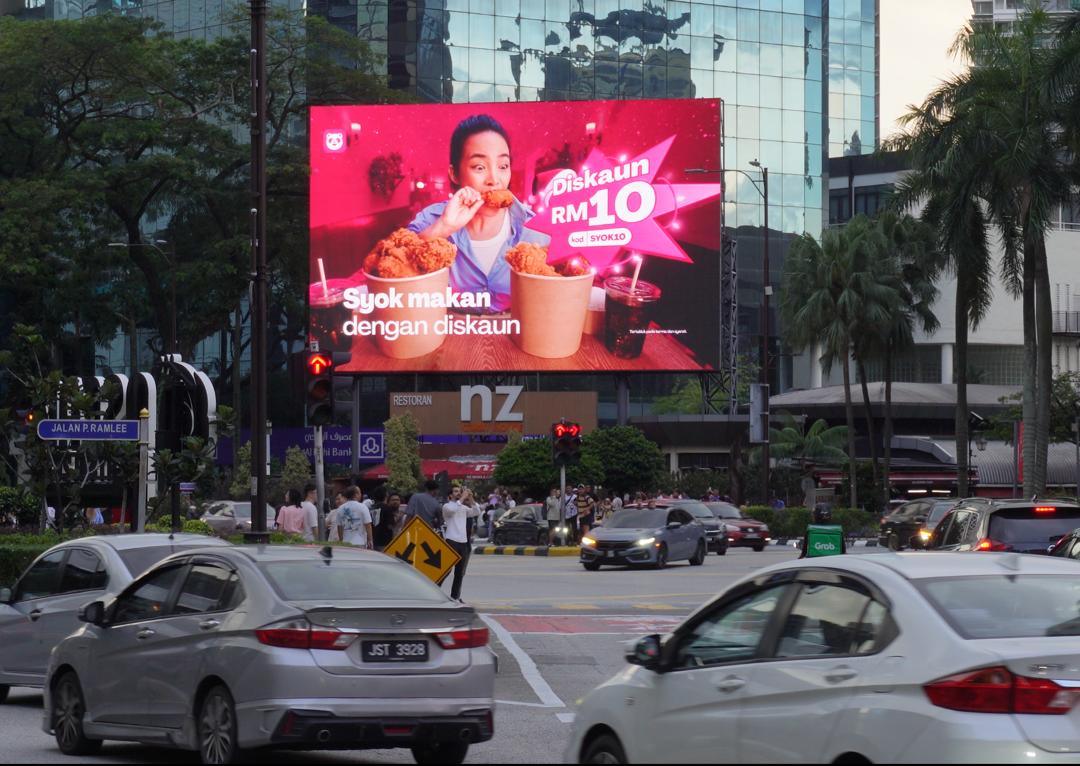
The consumer market in SE Asia, especially in fast growing economic centers like Indonesia and Malaysia, operates in a very unique way. On the one hand they are among the most digitally active populations in the world. On the other hand, they also have an incredibly high degree of skepticism concerning standard digital ad placements.
Today’s online world is heavily oversaturated with what marketing professionals call unpaid attention. This is a cheap, shallow form of attention that registers ads as views but doesn't create any long-term memory or emotional connection in the consumer's mind.
Here’s a typical scenario: You’re an entrepreneur who’s just created and launched a premium ready-to-drink bottled beverage. Much of your marketing budget is spent on high-frequency social media video campaigns or a fleet of micro-influencers. You check your automated analytics dashboard and see a total of 1 million impressions and experience a rush of instant gratification.
But the reality is very different on the ground. That million figure is mostly because people are aggressively flicking their thumbs up to skip your content as fast as they can. The attention you bought was forced upon them, not earned through genuine interest.
This poses a major long term challenge to the sustainability of your business. If a brand is exclusively dependent on digital screens and has no physical, tangible presence, consumers subconsciously think of that business as undervalued, unverified or essentially not there.
The urban population figures for Southeast Asia need to be physically verified. “People need to see a brand come to life in the real world before they develop the trust needed to open their digital wallets and pay for whatever you are selling.
What Actually Works: OOH as a Anchor of Credibility and Corporate Substance
Let’s dive into the psychology behind why out-of-home media has an inherent authority that social media algorithms can’t replicate. When you rent a strategic billboard in a high-traffic location, whether it is a busy downtown commercial hub, a heavily traveled commuter corridor or an important urban intersection, your business is doing a lot more than just showing a picture of a product.
You are sending a strong psychological message that you are operationally legitimate, financially sound and here for the long haul. A big physical billboard or tall digital LED screen in a public square is a physical anchor that can be seen, experienced and verified by thousands of people at the same time, every day.
Digital content is inherently ephemeral; a social media ad can be scrolled past, blocked by software or deleted in an instant. But a physical structure of advertising on a premium highway requires local regulatory approval, massive financial planning and real corporate confidence.
This is something Southeast Asian consumers are aware of at a subconscious level. They know that a casual, unvetted home business can’t just grab a prime piece of real estate in the city’s advertising landscape. Thus when they see your product on display in the public eye, their perception of your brand values instantly changes.
Your business transitions from being a generic online store to a well-established, highly professional industry player. This strategic positioning is the quickest way to get top of mind awareness before consumers even begin researching your brand online. Often a billboard in a retail corridor beats out thousands of low-quality online impressions.
Field Observation: Capitalizing on Communal Mobility Trends
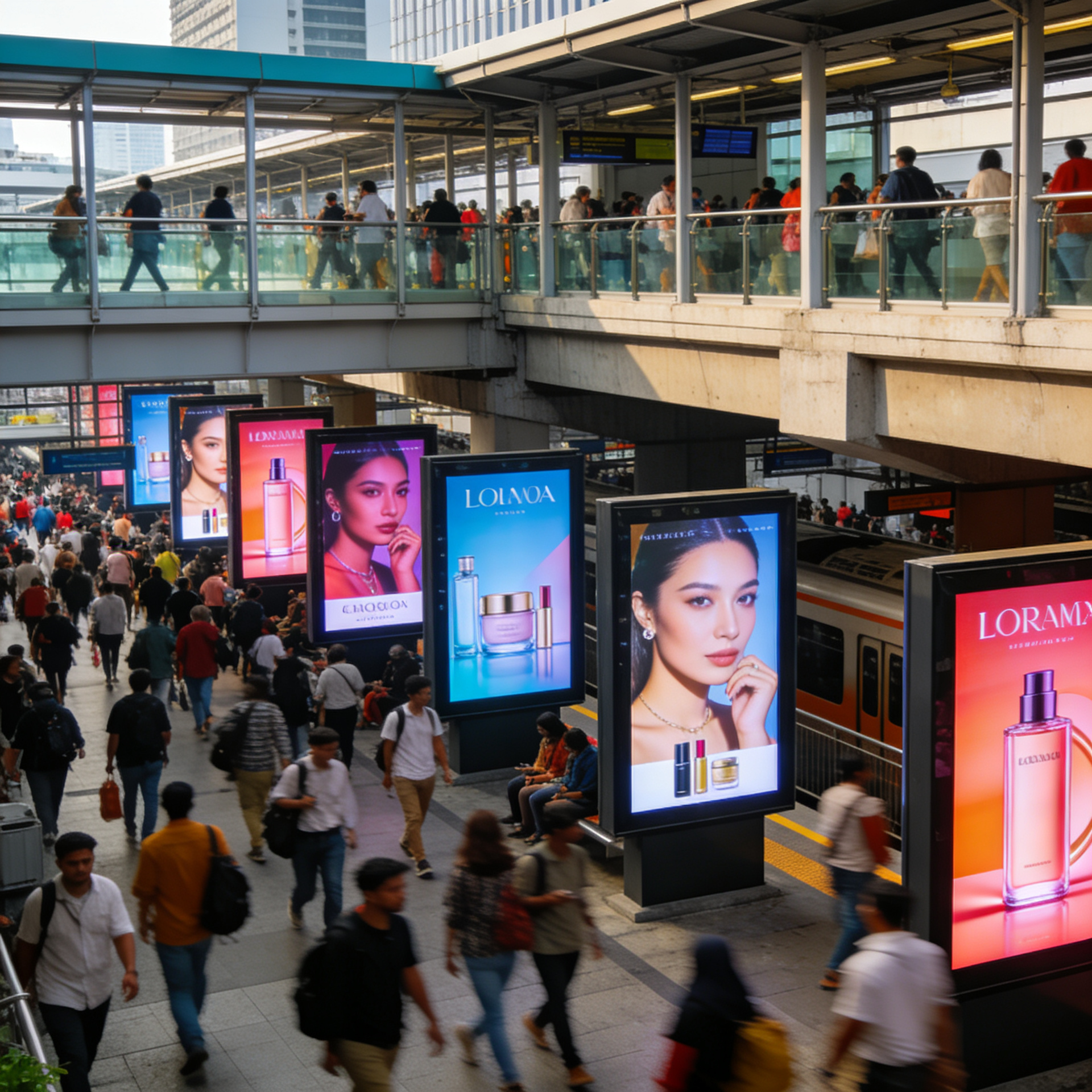
Because, if we look at the daily life patterns of the major metropolitan hubs in Southeast Asia, we see a highly communal and mobile behavioral trend. In this city, people spend an inordinate amount of time in transit, sharing the congestion of traffic and the same transit corridors from one day to the next.
Observe the way daily commuters behave. Thousands of office workers are waiting on train platforms or transit hubs at the end of a long tiring workday, suffering from digital fatigue. They cannot take in what is displayed on the small screens of their cell phones.
So in those moments where their brain is free , their eyes automatically drift away from their phones and look for visual relief in the environment . This is precisely where outdoor advertising becomes a very refreshing and unmissable medium of interruption.
If a public billboard has striking visuals, smart copy or a clever localized concept, the passing audience does not simply look at it passively. Southeast Asian consumers’ social and expressive culture naturally leads them to pull out their smartphones, snap the ad, and share it in their family chat groups or post it straight to their personal social media stories.
This triggers a powerful chain of organic amplification. Your billboard ad, which physically exists at only one set of geographic coordinates, instantly turns into a viral piece of digital content that your own target market is sharing around the internet.
This dynamic makes out-of-home media investments in this region phenomenally powerful, as one well-chosen location can create a huge echo effect that extends your reach without additional media spend.
Practical Advice: Selecting Media Sites for Strategic Impact
Success in the out-of-home media landscape means moving beyond the old way of just picking any random available frame and sticking your logo on it. The ability to analyze the specific context of a location and the behavior of the people moving through it is the key to maximizing your return on investment.
Here is a breakdown of practical advice every marketer should follow to ensure an effective outdoor campaign:
- Target High Dwell-Time Bottlenecks
- Match Geographic Context with Campaign Goals
- Make Sure You Have a Clear Line of Sight
Don’t judge a place by its raw traffic volume when that traffic is moving at 80 km/h down an open highway. Instead, seek out billboard locations at major traffic lights, busy intersections or urban choke points where cars are required to idle or slow down for 60 to 90 seconds. The long exposure provides the human brain with the crucial time it needs to read, interpret and remember your message.
Your ad must integrate perfectly with the environment where it is placed. If you’re selling a B2B enterprise service, a fintech solution or corporate logistics, your ads should be on the main arterial roads leading straight into the central business district. However, for fast-moving consumer goods, fashion labels and food brands, anchor your media near major shopping malls, lifestyle hubs and popular entertainment zones.
Carry out detailed field checks to confirm that the billboard structure is facing the flow of traffic (front-facing). Confirm that your creative design is not blocked by growing tree foliage, low-hanging public utility cables or pedestrian overpass bridges.
- Master the 7-Word Creative Framework
The rule of high-impact out-of-home creative is absolute brevity. Drivers and commuters only have a small window of time to absorb your message. Write a main headline that is clever, humorous and no longer than 7 words. Combine this copy with a high-contrast, eye-catching product image and make sure your brand logo is big enough to be easily identified from afar.
Common Mistakes Brands Make: Overcoming the Budget Myth
One of the most stubborn myths that prevents mid-sized businesses, local startups and homegrown brands from considering out-of-home media is the long-held belief that outdoor advertising is an expensive luxury that only multinational companies with unlimited marketing budgets can afford.
Here's the straight dope: That view is totally out of date in 2026!
Today’s out-of-home advertising landscape has evolved into a very agile, modular, and scale-inclusive business. Real marketing success is not about signing a multi-billion-rupee, long-term contract for a huge digital extravaganza in the priciest neighborhood of the capital.
A very effective tactical alternative is to run a localized micro-campaign. Brands can tactically lock in smaller, hyper-targeted, billboard placements within the community hubs of their specific target audience, or on the main roads that directly lead to their brick-and-mortar retail stores.
Instead of continuously burning good money on digital platforms to acquire cheap impressions from bots or audiences in faraway geographic locations who are unable to buy your product, you will be building much stronger brand equity, long-term consumer trust and demonstrable sales conversions over time by reinvesting those funds into one or two premium physical locations.