This is How You Get DBP Approval for Billboard Advertising
Securing a billboard in a busy area like the Federal Highway can be a great win for your campaign. But imagine having your billboard taken down because you did not get the proper approval. That is a headache no advertiser wants.
It involves more than choosing a strategic location to run a successful billboard advertising campaign. Therefore, before putting up an advertisement, businesses must get approval from the relevant local authorities and DBP. This is to ensure your campaigns follow the rules and can run without unnecessary interruptions.
So, what do you need to know before putting up a billboard in Malaysia?
Understand the Billboard Advertising Regulations in Malaysia
According to Big Network Media, billboard licensing and permits are managed by two main parties. The first one is the local authorities, also known as Pihak Berkuasa Tempatan(PBT). Examples like Kuala Lumpur City Hall (DBKL), Petaling Jaya City Council (MBPJ) and Shah Alam City Council (MBSA). Secondly is Lembaga Lebuhraya Malaysia (LLM), who managed most of the known highways in Malaysia.
On the other hand, advertisers must apply for visual and content approval from the Dewan Bahasa Pustaka, also known as DBP. In each city in Malaysia, there will be different guidelines on the content requirements. For example, cities like Kuantan and Kota Bharu will require the main wording to be inclusive with Bahasa Jawi. On the contrary, the same requirement isn’t necessarily needed in Georgetown and Kuala Lumpur. These authorities have rules to ensure that advertisements are safe, suitable and do not affect the surrounding area. Some important requirements include:
Understanding these rules early can help businesses avoid unnecessary problems during the application process.
What Content Can Get Your Billboard Advertisement Rejected?
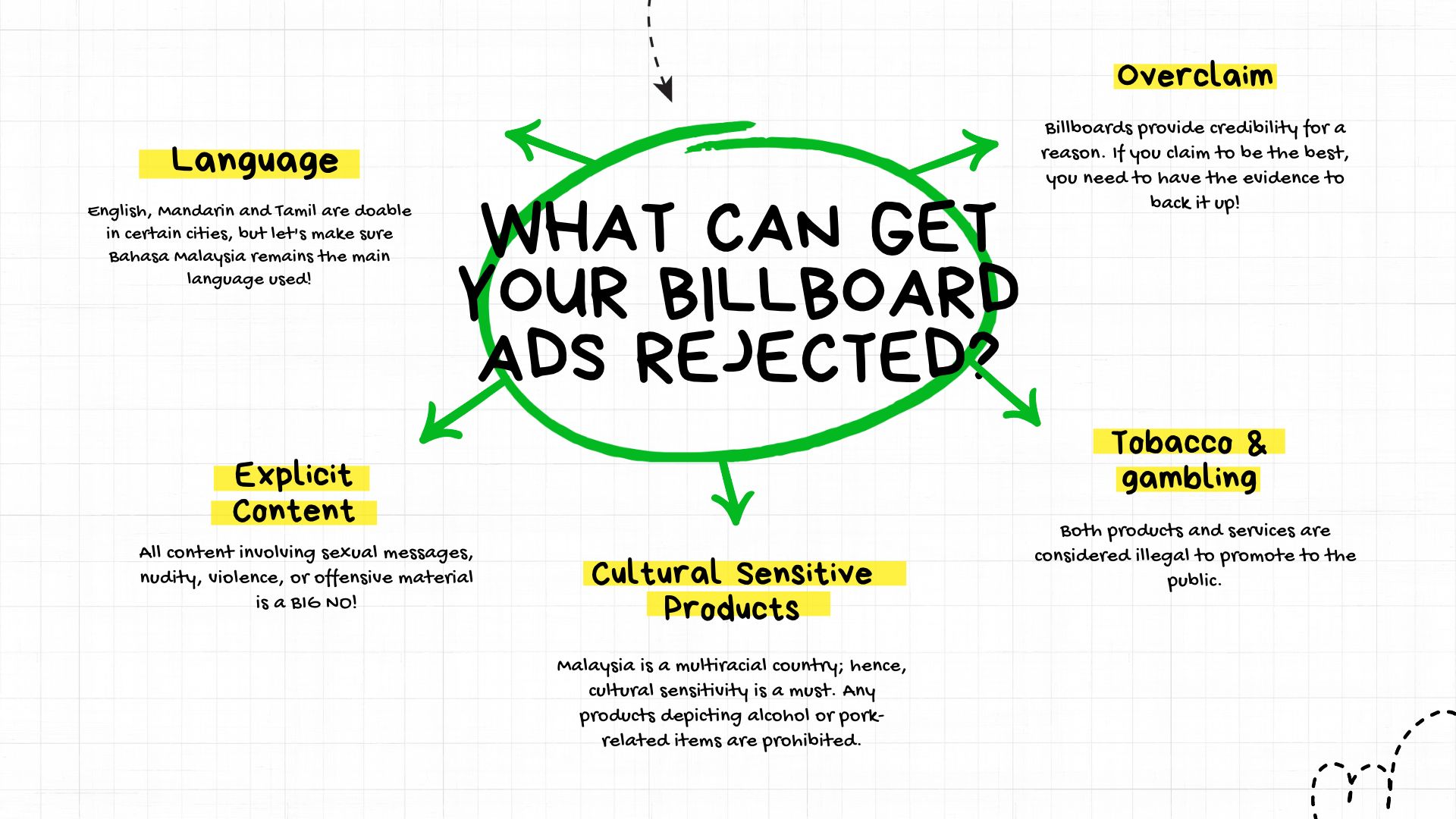
Not every advertisement is suitable for public display. Even if your billboard is visually attractive, certain words, images, or products may be the reason your application gets rejected. Beware of these red flags before submitting your application:
Language: While English, Mandarin and Tamil are allowed in many billboard advertisements, Bahasa Malaysia must remain the main language and take priority in terms of size and placement. Foreign-language slogans should not take up more visual importance than the Malay wording. Registered brand names and trademarks may be an exception, depending on the local authority's requirements.
Explicit content: Advertisements containing sexual messages, nudity, violence or offensive images will not receive approval. For instance, designs that reveal too much skin or go against local cultural and religious sensitivities may also face restrictions, particularly in states with stricter advertising guidelines, such as Kelantan and Terengganu. It is always best to keep your visuals respectful and suitable for a public audience.
Culturally sensitive products: DBP does not allow advertisements promoting alcoholic drinks or cigarettes. Pork and pork-related products may also face restrictions under advertising content guidelines. Bear in mind that these products may be acceptable in certain commercial settings, but it’s a different case when it’s on public billboards.
Tobacco and gambling advertisements: Tobacco advertising is prohibited under Section 7 of the Control of Smoking Products for Public Health Act 2024 (Act 852), which covers direct and indirect promotion of tobacco products and related smoking products. Gambling and betting advertisements are also classified as unacceptable under Malaysia's Communications and Multimedia Content Code. Relevant laws include the Common Gaming Houses Act 1953 and Betting Act 1953, which regulate gaming and betting activities.
Overclaim: Words like "The Best", "First in Malaysia" or "The Only One in Malaysia" may sound impressive, but can be questionable if there is no evidence to support them. If your advertisement makes claims about being the best, the first or the only provider of a particular product or service, make sure you have reliable proof to back them up.
Before sending your billboard artwork for approval, take some time to review its wording, images and claims. A little checking beforehand can save you from rejected applications, unnecessary delays and additional costs.
Prepare the Necessary Documents Before Applying
Once you understand the advertising requirements, the next step is to prepare the necessary documents. Having everything ready can help make the application process smoother and reduce delays caused by missing information.
Although requirements may differ between local authorities, some commonly requested documents include:
Billboard Design and Artwork: Prepare a design of your proposed advertisement in which all the content of texts, graphics, and photos are included. As all DBP submission requires language approval beforehand, do ensure the artwork submitted will be the final version for your billboard visual to ensure that the Bahasa Malaysia text follows the required standards.
KKLIU Numbers :KKLIU number is refer to an approval serial number given by the Malaysia's Medicine Advertising Board (Lembaga Iklan Ubat), which is a board under Malaysia's Ministry of Health. Health related services, pharmaceutical and supplement products will need this KKLIU approval and its approval number when applying for the DBP on any form of outdoor advertising. This ensure all services and products involving health will be checked and approved by board under the Medicine (Advertising and Sales) Act 1956.
Trademark or Copyright: As mentioned earlier, DBP requires Bahasa Malaysia to be the primary language in outdoor advertisements, including logos and slogans. However, this requirement may be exempted if your logo or slogan is trademarked or copyright-registered. So, if your brand slogan is in another language, remember to get it trademarked before submitting it to DBP!
Other Documents: Other than the above, if you're advertising a new development project, the DBP might request additional documents such as PBT approval letter on the naming of the project. The reason is simple, ensure that there isn't any false advertising about the project.
After preparing the documents, you can submit your application to the DBP official website.
Keep in mind that submitting an application does not automatically mean it will be approved. The authorities will review the documents and check whether the proposed billboard meets their requirements.
Why Fully Compliant Billboard Advertising Matters
Getting the necessary approvals is not just another step in the advertising process. It also helps protect your business from unnecessary problems.
Putting up a billboard without proper approval can lead to several consequences:
Fines and Penalties: Local authorities may issue fines or take enforcement action against businesses that display advertisements without the required licences.
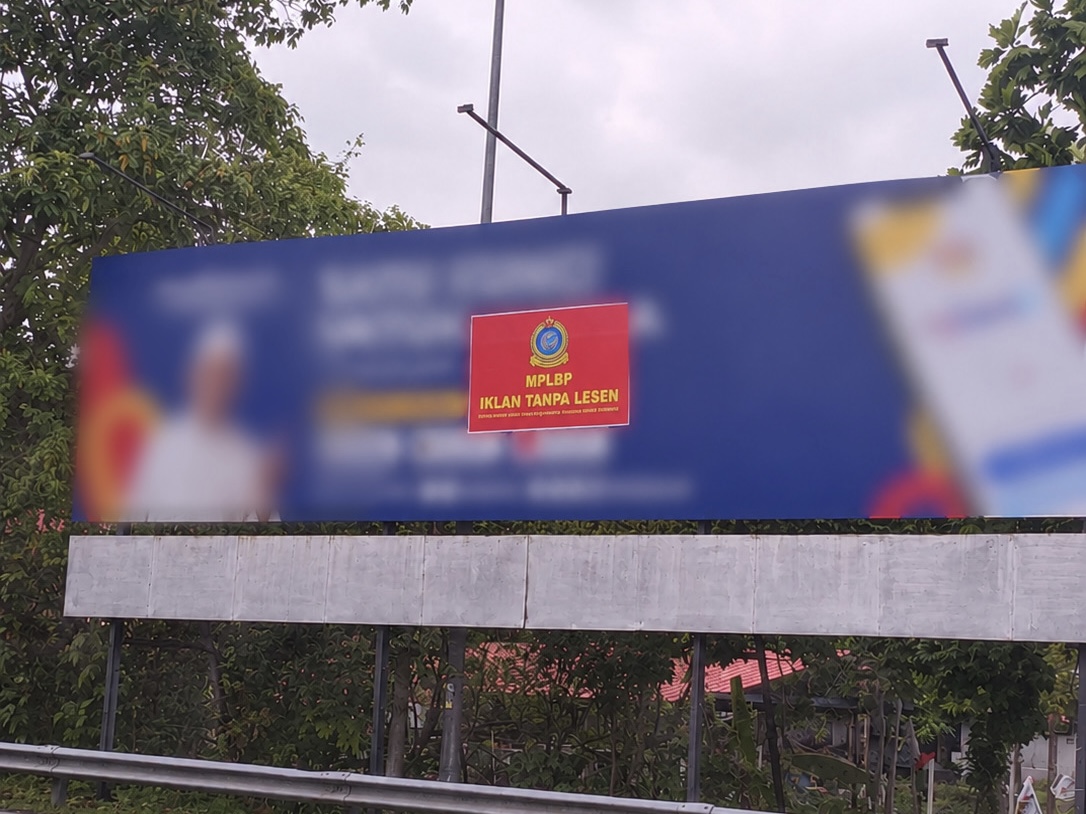
Unexpected Costs: Unapproved billboards may be ordered to be removed, or in some cases, they will stick a sticker on the billboard stating it was not licensed. Advertisers could face additional expenses from dismantling the structure or losing money spent on the campaign.
Campaign Delays: Approval issues can interrupt your advertising schedule, especially if your billboard needs to be taken down before the campaign ends.
Brand Reputation: Displaying advertisements without approval can affect how customers and business partners view your brand. Imagine spending over ten thousands on a billboard just to show you are displaying a visual that got “stickered” / dismantled. This basically shouts to the public that your brand doesn’t prioritise ethics!
This is why choosing the right outdoor advertising partner matters.
Getting your billboard outdoor doesn't have to be complicated.
Start planning with Firstboard to promote with confidence today!
Contact Us For More InfoBefore launching your next billboard campaign, make sure compliance is part of your planning process from the beginning. With the right preparation and advertising partner, you can keep your campaign running smoothly while making your brand visible to the right audience.
After all, great advertising should not only capture attention. It should also follow the rules!
References: